Saturday, April 30, 2011

The iPhone 5 News Blog News Feed

The iPhone 5 News Blog News Feed


Future iPhone 5 Already Plagued With “Privacy Fix”

Posted: 30 Apr 2011 05:30 AM PDT


angry steve jobs iphone 5

Steve Jobs and Apple already have to fix two major features of the iPhone 5.

With rumors of a return to a metal back and internal antenna, the iPhone 4′s Antennagate controversy last Summer has already forced Apple to implement a “fix” into the iPhone 5′s design. Now, the privacy issue is forcing Apple and Steve Jobs to do damage control for an iPhone 5 that hasn’t even materialized yet.

In spite of the millions of iPhones and iPads sold,  it has been a rough road for Steve Jobs and Apple recently.

In addition to Jobs’ health issues — which have had its share of business reprocussions on Apple, with shareholders fretting over CEO succession details in the untimely event of his passing — there have been a series of public relations blunders that he and Apple have had to damage control, beginning from as far back as last summer.

First, there was the embarrassment of the iPhone 4 prototype being leaked via Gizmodo. Then, Antennagate marred the release of the iPhone 4. More recently, Apple has been branded by eco-warriors Greenpeace as the “least green” tech company on the planet, and now U.S. lawmakers are aggressively attacking Apple’s flagship device — the iPhone — for logging users’ locations. In almost all of these cases, Steve Jobs has aggressively defended Apple, its products, and its business practices. WSJ.com reports that “Apple Chief Executive Steve Jobs, who is on medical leave, was unapologetic in his defense of his company’s actions. ‘Your precise location is never transmitted to Apple,’ he said in an interview.”

But there’s no doubt that these ongoing PR foibles are straining Apple’s marketing efforts. This is particularly true for the upcoming iPhone 5.

Amid recent reports that the iPhone 5 could turn out to be a mere refresh of the current iPhone 4, Apple will have to convince iPhone users that the A5 chip and iOS 5 is something to get excited about, should these purported features end up to be the centerpiece of the iPhone 5′s developments.

Even more concerning is that the new iPhone 5 specs may include as many “fixes” as it does new features.

Our favorite tech news source IT Pro Portal recently reported that Apple will indeed fix what they forgivingly call the “iPhone Location Logging Bug.” Writer Radu Tyrsina states that Apple “will be making changes in an iOS software update soon that will ‘fix’ certain bugs relating to the unencrypted file,” according to a Q&A that the company published in light of the controversy. In order to contain the public relations damage of the issue, Apple has taken a careful tack, stipulating that the inclusion of the “secret file” was a “mistake” — albeit an innocent one — and that Apple never downloaded this information nor used the data maliciously.

In any case, fixing the iPhone Location Logging Bug on the iPhone 5 won’t be a feature that Steve Jobs will be able to brag about when he walks out onto the stage to present it — whenever that may be. The same can be said for the antenna “fixes” that will make their way onto the iPhone 5 — namely, the purported return to an internal antenna and/or a metal back.

Is The iPhone 5 Already Dead On Arrival?

Several tech pundits have started to wonder: based on what we know at this point, does the iPhone 5 really have any chance to match or surpass its Android counterparts? The fact that Apple already has to “fix” two major features by essentially retro-engineering the iPhone 5 back to pre-iPhone 4 specs is a palpable black eye that will need to be overcome if the next iPhone is to compete in the smartphone market. But when you add up the two fixes, the later-than-usual release, and now the prospect of lackluster features, the outlook for the iPhone 5 begins to dim.

And considering that the antenna and privacy issues, plus the fact that every new 2011 Android release pushes the iPhone 4 further into obsolescence, an ominous forecast for the iPhone 5 leaves potential iPhone buyers with more and more reasons to go with an Android phone.

There is, however, one reason to hope.

One of the defining characteristics of Apple and Steve Jobs is the ability to blow our minds. Time and time again, Apple has managed to outdo itself and its competitors with new designs and features that revolutionize the consumer electronics industry. For as much as we think we know what is and what isn’t for the iPhone 5, something may indeed be in the works that no one will see coming, and that no competitor will be able to match.


Friday, April 29, 2011

The iPhone 5 News Blog News Feed

The iPhone 5 News Blog News Feed


Insider Reports That The iPhone 5 Essentially A Tweaked iPhone 4

Posted: 29 Apr 2011 06:20 AM PDT


iphone 5 big camera

Will features like an 8 megapikel camera, A5 chip & iOS 5 be enough for the iPhone 5?


It would stand to reason that the iPhone 5‘s features would match or even surpass current Android smartphones and excite iPhone users enough to buy in to the new model. But as iPhone 5 News Blog columnist Charles Moore reports below, credible tech and financial media outlets are citing sources that suggest lackluster improvements to the iPhone 5.

As Michael noted in his editorial, the white iPhone 4 turned out to be, well, a white iPhone 4 — nothing more, nothing less. No A5 chip; No iOS 5; No 8 megapixel camera. The good news is that those three features are pipped to appear in the iPhone 5 by a couple of financial analysts with insider contacts. What may be bad news for some is that those features may be the most significant changes distinguishing the iPhone 5 from the present iPhone 4, and those hoping for a more radical revision may well have to wait for the iPhone 6 sometime in 2012.

iPhone 5 Release Date Rumors Remain In Flux

In terms of a release update, other tech media outlets remain wildly divided on when both production and launch will begin for the iPhone 5. A widely cited Avian Securities research note earlier this month, excerpted by BusinessInsider’s Jay Yarow, maintains that, based on conversations with a key component supplier, iPhone 5 mass production won’t begin until September, leading them to deduce that the launch is to be in very late 2011 or more likely 2012.

Concord Securities analyst Ming-Chi Kuo in a note to investors posted Monday, April 18, concurs roughly with Avian Securities on the probable production startup and launch time frames (he anticipates some sort of announcement at the Worldwide Developers Conference (WWDC), to be held June 6 through 10 with a product launch possibly as early as October).

Lackluster Features Coming to the iPhone 5?

Kuo also says he’s been told by his supply chain sources that the iPhone 5 will not be an all-new design but rather a refreshed and enhanced iPhone 4, incorporating only what Kuo calls “slight modifications” from the iPhone 4 specs, including the faster A5 processor, an 8 megapixel rear camera, a switch to a Qualcomm baseband for both GSM and CDMA variants, and an improved antenna design.

Most alarming is that Kuo expects iOS 5 will be a “main selling point” of the iPhone 5, and will have already been released or at least announced before the fifth-generation phone itself.

You can read the entire AppleInsider report here.

Some of us might quibble with Kuo’s characterization of those changes as “slight”, but what he’s predicting does fall well short of expectations for those anticipating a major redesign with a completely new form factor, as we have discussed on this blog.

For that, Kuo says we’ll probably have to wait for the iPhone 6, which he says is in the works with a new design and greatly improved hardware specifications. According to a new rumor from Japanese newspaper Nikkan, cited mid-week by Appleinsider, one of those improved specs could be new displays constructed from poly silicon, or p-Si, thinner than the displays used in the iPhone 4.

Current iOS 5 Testing May Dispel iPhone 4s Rumors

In addition, The Mac Observer’s Jeff Gamet reports that Apple and AT&T are apparently already testing iOS 5 for the iPhone, iPod touch and iPad in real-world conditions, citing crash reports courtesy of developer FutureTap, which also indicate that the iOS 5 tests are being conducted on currently available iPhone, iPod touch and iPad models, and not on the rumored prototype iPhone 4s.

Charles W. Moore is a columnist for PBCentral and Applelinks, Appletell, and LowEndMac, and an exclusive iPhone news contributor for the iPhone 5 News Blog.

What do you think? Do you believe all these reports? Based on the dazzling new features of the 15+ new Android smartphones in 2011 alone, will a “refreshed” iPhone 5 be able to keep pace with Droid and energize iPhone users to invest in the new model? Or, is the iPhone risking a decline as a market-leading smartphone? Let us know what you think!


Thursday, April 28, 2011

The iPhone 5 News Blog News Feed

The iPhone 5 News Blog News Feed


iPhone 5 News Blog Editorial: How The Tech Media Overthought the White iPhone 4

Posted: 28 Apr 2011 08:45 AM PDT


white iphone 4The white iPhone 4 is finally here, and guess what — it’s white.

No A5 chip. No IOS 5. No 8 megapixel camera, or any other purported feature that will most likely find its way onto the iPhone 5. Instead, the white iPhone 4 lived up to its name flawlessly: nothing more or less than a white version of the original iPhone 4. And yet, when you compare the end result of weeks of rumor-milling in the tech world, what we ended up with is far from what all the speculation promised us.

Here on the blog, the white iPhone 4 was quite obviously not going to be a game-changing device. As I explained in a previous article, the purpose of the white iPhone 4 is simply to buy time in lieu of a later-than-usual iPhone 5 release and give the iPhone 4 lifecycle an extension. While it may be true that few people remain in the marketplace that are true white iPhone 4 holdouts, whatever number that “few” represents is certainly a large enough number to substantiate Apple’s move to pour some white paint into their plastic molds and churn out a few million units of the white iPhone 4. In the end, it is a very obvious, inexpensive, and effective way for Apple to sell more product.

If it was so obvious, then why did the tech media get so confounded with unrealistic expectations about the white iPhone 4? Why did they get it so wrong?

Perhaps in a kind of subconconscious response to the growing reality that the iPhone 5 isn’t going to hit the stores until the end of the Summer at the latest, the tech media managed to weave an exponentially complex tapestry of rumored iPhone iterations, some of which are still rumored to appear in the interim. Not long after the white iPhone 4 rumors gained traction, fresh rumors abounded about how app developers were to receive a developer-only, A5-equipped device, tagged the “iPhone 4s,” as a means of getting a head start on next-generation app and game development. The iPhone 4s would be nothing more than a souped-up iPhone 4.

And yet, it only took hours for the tech media to meld the white iPhone 4 and iPhone 4s into a new rumor altogether.

What started as a reasonable expectation for a white iPhone 4 turned out to be a white iPhone 4 with improved features. The expectation was that this new white iPhone would feature the beefed-up A5, maybe the 8 megapixel camera, and a host of other new features that would make it decidedly un-iPhone 4′ish. Even though there is virtually no other marketing pattern in all of electronics to support such a preposterous idea, and that the advent of an improved white iPhone 4 would effectively kill the growing anticipation of the iPhone 5, it was this perspective that dominated the media.

Then, the rumor mutated.

For another week or so, we were treated to an audacious new iPhone release schedule from a host of different tech media outlets, claiming that we would have the white iPhone 4 in late April, followed by the iPhone 4s in June, followed by the iPhone 5 in the Fall, followed by the iPhone 6 in early 2012. This is when I started to get angry, leading me to the unfortunate circumstance of calling a bunch of people whose names I don’t even know “stupid,” which you can read with great mirth on the iPhone 6 News Blog. Heck, even level-headed iPhone 5 News Blog lead columnist Charles Moore constructed an entire post about the dizzying rumors of this torrid iPhone release schedule here.

During this time, dozens of comments flooded in from people who literally needed to be talked down from leaving the iPhone franchise altogether over this cocophany of rumors. In this way, blogs who report honestly on iPhone news have become a kind of detox from all the misleading and irresponsible reporting going out into the mainstream — sort of like iPhone 5 outreach centers. In essence, we’ve all become the iPhone 5 Truthers, exploding unfounded rumors by way of one tried and true approach — common sense.

Common sense indicated to us from the beginning that the white iPhone 4 would be just that: a big hunk of white plastic, with maybe a few different cosmetic features to ensure that not too much light would bleed into the camera or proximity sensors.

And yet, here on Thursday, April 28th, the tech media and a google of iPhone devotees are just waking up to a self-induced level of disappointment over a white iPhone 4 that didn’t manage to live up to expectations, even though it lives up to its namesake perfectly.

The good news is that there is a teachable moment here — something positive to take from the rubble of strewn white iPhone 4s along the trail of rumors leading to the iPhone 5: don’t believe the hype. It’s important to remember that tech blogs have a vested, cynical, and monetary motivation to inflate, conflate, and mis-state the very little bit of actionable intelligence that we receive about the iPhone 5 and all other iPhone stops in between. And because of the nature of the press, few if any tech pundits ever take responsibility for irresponsible reporting; they only take credit for when they get the story right.

Which, in the case of the iPhone, is only very rarely.


Wireless Charging For the iPhone 5 May Lead To Poor Battery Performance

Posted: 28 Apr 2011 03:03 AM PDT


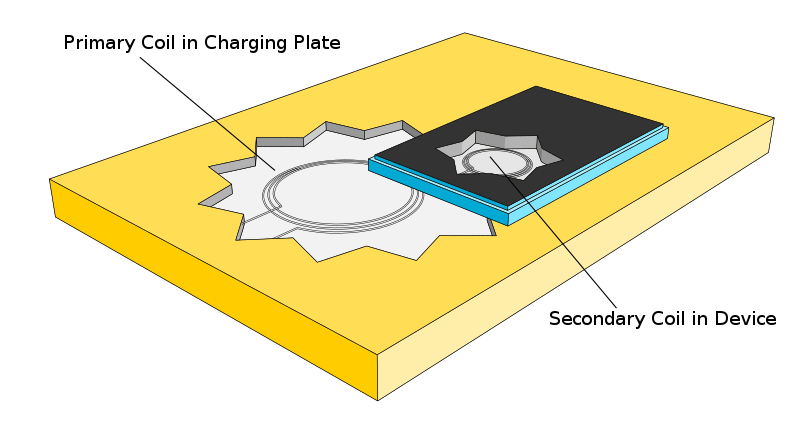
iphone 5 inductive charging

Diagram courtesy of Wikipedia. Could the iPhone 5 feature new inductive charging technology?

New rumors suggest that wireless charging could be coming to the iPhone 5. But is wireless “inductive charging” a reliable enough technology for the next iPhone?

Scan the recent iPhone 5 rumor mill news and you’ll see some new reports indicating that Apple has a few compelling patents on file that lead tech pundits to believe that the iPhone 5 could possibly feature next-generation wireless battery charging. Among the more developed articles on this purported new development is FoneHome’s article, which explains that Apple’s wireless charging patent features a series of docking models:
“Built into these docks would be an inductive coil. Once placed in close proximity to a device that also possesses one, an alternating current is passed from the base to the portable unit, which is then converted to DC power. Hey presto – you have a charged iPhone battery without ever having to directly plug it into anything. Interestingly, inductive coils can also be used to transfer data.” You can read their entire article here.

To be sure, battery technology — particularly for mobile devices — always remains a hot topic, since iPhone users understand intuitively that better batteries means longer, more extended mobile computing of advanced apps and features. All you have to do is take a look at the results of the poll at the bottom of our iPhone 5 Features page, which indicates that  an “improved battery” comes in third of twenty possible new features for the iPhone 5, ahead of much sexier features such as “e-ink/retina displays,” “smart bezels,” and “NFC technology,” to name a few. Even though the battery on an iPhone isn’t a very interactive feature, iPhone users understand its critical importance.

Of course, so too does the average tech blog, which is why taking an obscure Apple patent and crafting it into the next big iPhone 5 rumor is an easy way to garner a lot of attention and web traffic.

If docking your iPhone or plugging it in for a charge seems incredibly laborious to you, then the idea of being able to just lay your iPhone 5 down on a charging plate at the end of the day probably seems like a groundbreaking idea. And if this is the case, then Apple will be equally excited to sell an expensive wireless charging peripheral to go with the iPhone 5, thus exponentially increasing their profit margins.

But before we get ahead of ourselves, it’s important to note that wireless charging has been around for quite some time now, and it is not known to be the most reliable technology when it comes to charging. It could, in fact, turn out to be a disappointing feature for the iPhone 5 if Apple doesn’t make some considerable changes to the current technology.

Wireless charging, also known as induction charging, is known to fail at fully charging batteries. Electronics Warehouse has an interesting article that compares induction charging to the use of NiMH rechargeable batteries that were charged using AC power. The article quotes IGN on the issue of using Nintendo’s induction charger for the Wiimote, saying,

“Transmitting energy wirelessly, as you can imagine, is not nearly as fast or effective as transferring it through a physical connection, as such, it takes a significantly longer time to fully recharge the battery pack. To fully charge an empty battery, a Wiimote has to be placed on the charger for somewhere between six and eight hours; a pretty lengthy bit of time, no doubt."

It really should be no revelation to gadget users that AC power remains king when it comes to charging batteries: DC power, such as the power used when charging with a cigarette lighter in your car — is historically underpowered compared to plugging your smartphone directly into an AC wall socket. The same is true with induction charging: although the base unit plugs into the wall alla an AC plug, the current that flows from the charger to the device is purely DC.

All of this being said, Apple has demonstrated over the years that they are technology leaders when it comes to rechargeable batteries. In fact, they have spent copious amounts of money, time, and resources on making bigger, bolder, better batteries. If the iPhone 5 ends up with wireless charging features, chances are that it will be the cream of the crop in terms of inductive charging. But no matter what, wireless charging will always be DC-powered.


Developer Receives First Crash Report From iOS 5.0

App Store developer FutureTap has just received their first crash report from an iOS 5.0 device indicating that Apple has begun field testing its upcoming operating system.
The application apparently crashed in iOS 5 due to the MKUserLocationBreadCrumb. Developer Will Strafach (Chronic) informed 9to5Mac that this API relates to the iOS maps and location functionality.
Just received the first iOS 5.0 crash report. MKUserLocationBreadCrumb sounds interesting.
Apple is expected to unveil iOS 5.0 at its WWDC 2011 Developer Conference.

White iPhone 4 is Susceptible to Limera1n Jailbreak

The white iPhone 4 being released tomorrow is susceptible to the limera1n jailbreak, according to tweets by iH8Sn0w.

For future (tomorrow or today) White iPhone 4 users, limera1n is NOT patched and has no difficulty with current jailbreaks.

Also for those wondering, i0n1c's untether will work for the device as well.

i0n1c's exploit is iOS based. Since the iPhone 4 runs the SAME iOS, its fine.
You can find Limera1n Jailbreak from Here
The latest Redsn0w Jailbreak (i0n1c's untether)from Here

Amazing Concept Turns iPhone Into a Leica Camera

The Leica i9 Concept is a dream project by BLACK Design Associates that addresses a desire to combine two great products, the iPhone and the Leica!

The Leica i9 Concept is a dream project by BLACK Design Associates that addresses a desire to combine two great products, the iPhone and the Leica.

FEATURES:
INDEPENDENT CAMERA BODY - doesn't depend on the iPhone4 processor, making the i9 a true ready-to-shoot camera.

COMPACT OPTICAL ZOOM - offers true optical zoom with a greater number of focal lengths in a compact size.

LEICA RANGEFINDER - allows for faster uninterrupted shooting.

CASE FORM FACTOR - makes the i9 ultra-compact and protects your iPhone4 in a rugged and stylish case.

CAMERA BACK DOCK - loads your iPhone4 reminiscent to traditional 35mm film and takes full advantage of the iPhone4's superior Retina Touch-Screen Display.

INTERCHANGEABLE CAMERA BACK - ensures the i9 is compatible with future generation iPhones.

CAMERA/iPHONE TOGGLE - turns on your camera with an instant start-up time of 0.3sec., while simultaneously loading the Leica app on your iPhone4.

ZOOM/VOLUME CONTROL - adjusts Tight and Wide when your camera is on, and adjusts volume Up and Down when your camera is off.

DEDICATED APERTURE AND SHUTTER DIALS - offers fast and easy option for manual operation.

PASS-THROUGHS AND ACTUATORS - gives you full access to your iPhone4 controls and headphone jack.

FLASH AND LIGHT METER - offers higher quality photos and videos in low-light conditions.

BLACK Design Associates estimates that the LEICA i9 for iPhone 4 would cost around $900-$1200 and have a 5-10 year life cycle. While that price sounds high it is considerably less than the $7000+ for a LEICA M9.

Take a look below...
Read More


Let Steve Jobs protect your iPhone 4

You must be very proud of using iPhone 4, if let Apple's Boss protect your iPhone 4, you may feel light-footed, this case is cute – and it likely won’t last. Society6 studio Burb is offering a Steve Jobs in Carbonite case for the iPhone. Very touching. Keep your iDevice clean and snug with the essence of Apple retained!

You must be very proud of using iPhone 4, if let Apple's Boss protect your iPhone 4, you may feel light-footed, this case is cute – and it likely won’t last. Society6 studio Burb is offering a Steve Jobs in Carbonite case for the iPhone. Very touching. Keep your iDevice clean and snug with the essence of Apple retained.
Available for iPhone 4 and 3G/3Gs, $35. Act fast, Apple’s next Cease & Desist is likely on the way…

Wednesday, April 27, 2011

The iPhone 5 News Blog News Feed

The iPhone 5 News Blog News Feed


iPhone 5 Wedge Form Factor And 3.7″ Display Rumors Ramp Up, But There’s This Imminent White iPhone 4 Release…..

Posted: 27 Apr 2011 04:00 AM PDT


wedge shaped iphone 5

Will the iPhone 5 feature a wedge or teardrop shape?

Read Charles Moore’s new column on the new possible shape of the iPhone 5 and the imminent release of a white iPhone 4s.

Hope everyone had a great Easter weekend. We’re back in the harness, with new rumors afoot about the iPhone 5‘s revised form factor. Will it be made of carbon fiber? (extremely doubtful this time around), aluminum? (considerably more probable), or stick with the current glass back? (I’m guessing likely not).

thisismynext.com’s Joshua Topolsky says that while current Internet chatter is suggesting the iPhone 5 will be little more than a speed bump (ie: A5 chip) and feature enhancement in the iPhone 4 form factor what he’s been hearing from a variety of unnamed sources is that the iPhone 5 will have a more iPod touch or mini iPad 2 look, with a larger display screen of perhaps 3.7,” retaining the present resolution, and occupying most of the device’s front face with only a slim marginal bezel, but with a larger Home button also supporting gestures.

Why not an even four-inch screen? The reasoning is that with 3.7″ diagonal and the current resolution, pixel density – the key to Apple’s Retina Display bragging rights, would drop from 326 ppi only down to 312 ppi — still comfortably above the somewhat arbitrary Retina Display technology threshold of 300 ppi. However, with a four-inch screen, pixel density with the same resolution would go down to 288 ppi.

Even with a 3.7″ screen, rendering would be somewhat less sharp than it is with the iPhone 4′s display. A good analogy is the G3 iBook and Pismo PowerBook laptops I was running back to back several years ago. Both machines had 1064 x 768 resolution displays, but the Pismo’s was 14.1″ while the iBook display was 12.1″ in physical dimension, which made its rendering significantly sharper and crisper than with the larger PowerBook’s screen.

Other rumors include an iPhone 5 with a larger display and a wedge or teardrop shape thinner than the iPhone 4 and reminiscent of the generation 2 MacBook Air.

However, here’s the thing once again; a redesign that radical for release this coming summer or even fall would not set well with a whole lot of folks who’ve just bought Verizon CDMA iPhone 4s and white iPhone 4s (expected to start selling by the end of the week — possibly as early as Wednesday April 27), who are going to be unhappy campers. A degree of this dynamic is inevitable with the release of any new product upgrade. Think of the folks who had just bought MacBook Airs last September. It happened to me when I bought an aluminum unibody MacBook three months before Apple morphed that model into the 13″ MacBook Pro with FireWire and SD Card support. However, in this instance, a radical iPhone 5 revamp release sometime in the June – September time window would be really hot on the heels of the white iPhone 4 release.

Not that I’m certain Apple won’t do it anyway, but why would they go to the considerable trouble of ramping up white iPhone 4 production and channel distribution only to replace it with a new model in just a couple or three months’ time? Doing so just to wring a few more sales out of a lame duck iPhone 4 seems pretty cynical, and Apple is usually a classier act than that. Which is another reason why I think an iPhone “4S” upgrade with an A5 processor and perhaps an 8 megapixel camera seems more likely in the near term, with the iPhone 5 release held off until late fall or even 2012.

On Monday, Chris Chang of the Chinese Apple-oriented site M.I.C. Gadget posted an image of a white iPhone with a larger display than depictions of the white iPhone 4 have shown, which he says my be someone’s mockup…. or….”prototype iPhone with an A5 processor that game developers are using to prepare their iPhone 5 apps.” Interesting, but nothing conclusive there. Still mostly rumors and conjecture, but the white iPhone 4 at least should be reality by the end of the week.


How Show iPhone Screen on PC Screen

now your iPhone is able to remote on your computer or mac :
follow this or watch video
-go to http://www.realvnc.com then download program vnc for your computer
-go to cydia in you iphone home menu and search veency and then install it ..... for more watch in this video

with link here : http://www.youtube.com/watch?v=Krg3lP-Gzhs


Tuesday, April 26, 2011

The iPhone 5 News Blog News Feed

The iPhone 5 News Blog News Feed


The Global iPhone 5: Why Not Sprint, Why Not Now?

Posted: 26 Apr 2011 07:32 AM PDT


sprint iphone 5

If the iPhone 5 is going to be a "global" device, why not add Sprint?

Verizon’s CFO recently leaked information that the iPhone 5 would indeed be a “global” device that works on both GSM and CDMA networks. Given the fact that Sprint operates on CDMA, why wouldn’t the iPhone 5 be offered on the U.S.’s third largest carrier this time around?

Ever since the release of Verizon’s iPhone, many had wondered whether Apple would design the iPhone 5 to be a dual network device, integrating both GSM and CDMA compatibility into one phone, or instead offer two separate devices for AT&T and Verizon, respectively. Lucky for us, Verizon’s CFO Fran Shammo seems to have spilled the beans on a dual-network, “global” iPhone 5, as we reported in another article. Outside of an official confirmation from Apple — which won’t come until the formal announcement of the iPhone 5 — it’s apparent that the iPhone 5 will support both GSM and CDMA.

Given these apparent facts, why doesn’t Apple extend the iPhone 5‘s availability to include the Sprint network?

In the world of U.S. mobile networks, Sprint is often regarded as the red-headed stepchild of them all: while AT&T touts speed and Verizon boasts of coverage, Sprint’s business model is all about marketing its value pricing. Because of this, many performance-minded smartphone users opt for speed or coverage over savings, making AT&T and Verizon the top two carriers. But Sprint, after all, is the third largest mobile carrier in the U.S., with over 55 million subscribers. When you consider that AT&T, America’s top provider, has 62 million subscribers, you begin to see how the difference between first and third isn’t all that wide, and that opening up the iPhone 5 to Sprint’s customers could be advantageous.

Especially considering that the Android smartphones are already on Sprint.

Recently, Sprint has been pushing Kyrocera’s new Echo smartphone, a dual-screen marvel that seems to be paving the way for the next generation of Android 3.0 gadgets, both in the smartphone sector as well as tablet devices to go up against the iPad 2 (such as Sony’s new S2 fold-up, dual-screened tablet). For as much as the iPhone 5 will need to compete with dual-screened devices like the Echo on the technological level, Apple will also have to match Android in availability as well.

With this in mind, wouldn’t it make sense to offer the iPhone 5 to Sprint’s 55 million subscribers? After all, Sprint utilizes the same CDMA technology as Verizon. In this way, the iPhone 5′s “global” characteristics would jive perfectly with Sprint as it does with Verizon.

To date, there is no hard evidence that the iPhone 5 will indeed be offered on the Sprint network. The only credible shred of information about Sprint and the iPhone 5 was from Sprint’s Chief Financial Officer Robert Brust, who simply said of the iPhone 5 in May of 2010 that “we’d love to have it.” The iPhone 5 News Blog reported on this story way back in February that a Sprint iPhone 5 is a possibility. So, if the iPhone 5 surprisingly appears on Sprint at the end of this summer, remember that you saw it here first!

The iPhone 5 on T-Mobile?

Just today, there are fresh reports from Beatweek and other tech news sources that either the iPhone 5 and/or white iPhone 4 will be released on AT&T’s newly subsumed carrier T-Mobile. Beatweek boldly claims that, “AT&T just bought T-Mobile. AT&T already offers the iPhone. As such, T-Mobile was probably already a lock to offer the iPhone 5. A late arriving iPhone 5 means Apple could, if it wants to, go ahead and do a T-Mobile iPhone 4.”

While that deductive reasoning by Beatweek and others may make for a sensational headline, it represents irresponsible journalism at best: at the time of T-Mobile’s acquisition by AT&T for $39 billion in March of 2011, T-Mobile made it resoundingly clear that the iPhone 5 — or any iPhone for that matter — would not be released to T-Mobile customers in 2011.

In a succinct article on IT Pro Portal, Desire Athow reports that, when asked about the iPhone coming to T-Mobile:

“In a FAQ published by the company earlier today, the answer is a resounding no. T-Mobile USA says that it remains an independent company as the acquisition process is expected to last at least one year. It added that it will not offer the iPhone 4 (and its successor the iPhone 5), instead redirecting customers to “cutting edge devices” like the Samsung Galaxy S 4G and the Sidekick 4G, also built by Samsung.”

Unless the official statements from AT&T and T-Mobile were blatant lies, then there is no reason to believe rumors of a T-Mobile iPhone release this year.

Don’t believe the hype.


Monday, April 25, 2011

The iPhone 5 News Blog News Feed

The iPhone 5 News Blog News Feed


Verizon iPhone, White iPhone 4s & iPhone 5 Make 2011 Busiest iPhone Year Ever For Apple

Posted: 25 Apr 2011 08:02 AM PDT


iphone 5 busy scheduleFor as much as 2010 was a banner year for Apple, with the debut of the iPad and iPhone sales topping 40 million units sold, a busier, more frenetic iPhone release schedule for 2011 is bound to supercharge sales unlike anything we’re ever seen before. With the appearance of the Verizon iPhone in early 2011, the impending release of the white iPhone 4 and purported iPhone 4s, and the eventual iPhone climax — the iPhone 5 — the public will get its fair share of the iPhone this year.

Many might wonder why Apple has upped the ante on iPhone releases for this year, considering how much anticipation and excitement surrounds the usual June release of the newest iPhone. While Android and Blackberry phones outnumber the iPhone, all of them combined do not add to the media frenzy and consumer fervor over the iPhone. On this blog alone, it isn’t unusual for there to be over 60,000 page views a day from people worldwide, all seeking out the latest news on the iPhone 5.

Why would Apple want to subdivide and possibly dilute the buzz that they have so deftly created for iPhone releases by offering multiple releases of the iPhone in a given year?

Some in the media suggest that the staggered releases of the Verizon iPhone, white iPhone 4, and eventual iPhone 5 all point to a sloppy, disorganized release schedule of Apple this year, indicating that perhaps the complexity of adding Verizon to the mix, Steve Jobs’ ongoing health concerns, and unforeseen calamities such as the Japanese earthquake all shaking up the technology giant’s best-laid plans.

More likely, however, is that Apple is evolving their marketing approach to meet the heightened competition brought on by Google’s Android-equipped smartphones. Unlike Blackberry, which designs and manufactures its own smartphone devices like Apple, Google’s partnership with multiple smartphone producers makes competing with them more cumbersome; while the iPhone has traditionally hosted just one big release each year, Droid phones seem to continuously pop up here and there throughout the year. One of the more recent Android offerings, Kyrocera’s Echo, is an impressive new dual-touchscreen design that is already making the iPhone 4 seem outdated, upping the ante on which new features the iPhone 5 will offer.

Even though Android smartphones don’t garner the same attention as the iPhone, the multitude of different models keep new Android technology fresh in the tech bloodstream.

Apple, in turn, has to answer these challenges in the marketplace.

So, the result may be this new release schedule, where we are treated to multiple iterations of the iPhone throughout the year. Instead of having to wait for the iPhone 5, for example, we’ll also have the white iPhone 4, and who knows — maybe an iPhone 4s available to the public? We’ve already discussed at length how the white iPhone 4 is a bit of a paper tiger and perhaps nothing more than a way of keeping the iPhone hype machine running. But even if that is its only purpose, for Apple it is what they perceive to be necessary in order to keep competing against Google in the smartphone race.

iPhone 5 To Be Released On The Cusp Of The New Fiscal Year?

Just a note about the purported September release of the iPhone 5 for September 2011: for most of us, the “year” runs from January to December, so anything that happens within that time frame is considered to be happening in 2011. But for Apple, their fiscal year ends on September 24th. If the iPhone 5 ends up being released on the other side of September 24th, for Apple, that will mean that the earnings for the iPhone 5 will start at the very beginning of fiscal year 2012.


iOS Unlocking Technology

iOS Unlocking
As for unlocking, most phones (here in the US, anyway) are "locked" to a particular network. In the iPhone's case, that's AT&T for the US, O2 for Great Britain, and so on. Should you want to use your iPhone with another GSM carrier, you need to unlock.
Unlocking lets you place calls with any GSM carrier by inserting different Subscriber Identity Modules (SIMs) into the phone. Normally these SIMs from unapproved carriers won't work. When your iPhone is unlocked, just buy a local GSM-compatible SIM, place it in your phone, and make your calls. You'll be able to use your iPhone around the globe without paying exorbitant roaming fees.
Unlocking Technology
A handset can be unlocked by entering a special code, or in some cases, over-the-air by the carrier. Usually the unlock process is permanent. One example where it is not is the Apple iPhone, which is officially unlocked (when applicable) every time during its activation step. The code required to remove all SIM locks from a phone is referred to as the master code, network code key, multilock code.
Typically, a locked phone will display a message if a restricted SIM is used, requesting the unlock code. For example, on the Sony Ericsson T610 mobile phone, "Insert correct SIM card" will appear on the phone's display if the wrong SIM is used. Other phones may display a "Enter special code" or "Enter unlocking code". Once a valid unlocking code is entered, the phone will display "Network unlocked". In some cases, the phone will simply display a message explaining that it is locked.
The unlock code is verified by the phone itself, and this code is calculated by the network provider, typically by a complex mathematical algorithm that involves the IMEI of the phone in question. The algorithms used in earlier Nokia brand phones (based on IMEI and MCC code) have been reverse-engineered, stolen or leaked, resulting in many people offering Nokia unlock codes for free or for a fee.
Many other manufacturers have taken a more cautious approach, and embed a random number in the handset's firmware that is only retained by the network on whose behalf the lock was applied. Such phones can often still be unlocked, but need to be connected to special unlocking boxes, such as UFS or JAF and the Universal Box that will rewrite that part of its firmware where the lock status is kept, and often even recover a phone that is "bricked" or completely damaged in the software sense. Common characteristics of such phones include no response from the phone on attempting to switch it on, though in some cases it can be recovered or "unbricked" merely by holding some keys down while switching on the phone.
Most phones have security measures built into their software that prevent users from entering the unlock code too many times. After that the phone becomes "hard-locked" and a special unlocking box (mentioned above) has to be used in order to unlock it.
However, certain phones, notably the high-end PDA's and PocketPC's, are unlocked by the use of special programs that require the phone to be connected to the computer and read the unlock code. So, such phones can be unlocked free of cost.
Handset manufacturers have economic incentives both to strengthen SIM lock security (which placates network providers and enables exclusivity deals), and also to weaken it (broadening a handset's appeal to customers who are not interested in the service provider that offers it). Also, making it too difficult to unlock a handset might make it less appealing to network service providers who have a legal obligation to provide unlock codes for certain handsets or in certain countries.
The main reason to unlock a phone is to be able to use it with a different SIM card. For example, when traveling abroad it's usually cheaper to temporarily use a foreign network, for example with a prepaid subscription. An unlocked phone can't access extra cell phone towers or give free phone service. All it can do is accept other SIMs.
In some cases, a SIM locked handset is sold at a substantially lower price than an unlocked one, because the service provider expects income through its service. Consumers may choose to unlock their phone and continue using their previous provider. Therefore, SIM locks are usually employed on cheaper (pay-as-you-go) handsets, while discounts on more expensive handsets require a subscription that provides guaranteed income.
Also, the unlocked phones have a far higher market value, even more if they are debranded. Debranding often also involves special unlocking boxes that remove the operator logo on startup and a variety of limitations that have been imposed on the device by the operator to increase income, as in the case of the iPhone in which the mobile operator AT&T disabled a feature called tethering that allows the phone to be used as a modem on the computer; in other cases, it can be achieved with a home PC, free legal software avaiable online and the USB cable specific to the model.

OSFlashVideo To view some Flash videos on your iPhone without Jailbreak

There is a new javascript very interesting for all users iPhone / iPod Touch and iPad. It's called iOSFlashVideo and allows you to view some videos in Flash within Safari. It's compatible with all iDevices, even those without the jailbreak and works in a really very simple.

I think the base of operation to use the same javascript included in Skyfire, but here to follow all the steps necessary to install and use.
Thanks to Video iOSFlash be able to view the web pages you visit, the media player in Flash, which contain video. It 'very useful in the case of Vimeo and other similar Servisi. We tell you now that Megavideo does not work for another but let's see how to add it in Safari.

Installing iOSFlashVideo:
1. Link to the browser on your iPhone / iPod Touch / iPad to this address: http://iosflashvideo.fw.hu/
2. Click the + button located on the bottom bar of your browser. Now select "Add Bookmark" and click Save in the upper right.
 
Read More On Next Page

How to Fix the iPhone Worm

If your iPhone is jailbroken and if you see the below image as your home screen, it is time to tighten your pants security and fix your worm affected iPhone.


A hacker named ikex has created what’s apparently the first iPhone worm, and it’s currently infecting jailbroken iPhones across Australia. The “ikee” worm, as it’s being called, takes advantage of the fact that jailbroken iPhones with SSH installed all have the same default root password of “alpine,” and once in the system it changes your wallpaper to an image of Rick Astley and then tries to install itself on other jailbroken iPhones on the network. On the top of the screen it says “ikee is never going to give you up”. If you have been affected, luckily there is no harm done as this virus was more of an experiment than anything else.
Once an iPhone has been infected by ikee, it automatically starts searching for other iPhone’s on the cellular network that use the root:alpine username/password combination. Once it finds another vulnerable iPhone, it installs itself and begins the process again and this goes on like a nuclear chain reaction. ikee virus will disable SSH access on your iPhone and will change the background image to that of “Rick Astley” as can be seen in the screenshot above.
To protect your jailbroken iPhone or iPod touch from ikee virus attack or any other similar attacks in the future, you must change your default SSH password now.

How to Change Default SSH Password and Fix ikee Virus on iPhone?


2. Start MobileTerminal app and type the following command to change the root password

login

Press enter. And then type

root

as your login and ‘alpine‘ as your current root password.
After logging in, Type

passwd

Press enter.


3. It will now prompt you to enter a new password (twice). Simply enter your desired new password again.

Now. it should all be fine.

And the following step: you need delete the virus files there are two methods to delete them:
M1.You can Delete the files in the SSH
M2.(Recommended) Delete the files via iPhone Explorer


Download iPhone Explorer for Windows
Download iPhone Explorer for Mac

Run iPhone Explorer , click CHANGE ROOT DIRECTORY,then click REAL IPHONE ROOT DIRECTORY(ADVANCED USERS), you can see all the catalogs
3.Delete the following files :
(1). /var/mobile/Library/LockBackground.jpg
(2). /System/Library/LaunchDaemons/com.ikey.bbot.plist
(3). /bin/poc-bbot
(4). /bin/sshpass
(5). /var/log/youcanbeclosertogod.jpg
 
4. After deleting the files, reset your home paper, reboot iphone, Done!!!